
That’s not controversy — it’s physics. Vitalyx Labs brings to market a next-generation colloidal silver designed to actually interact with microbial environments.
The problem isn't silver. The problem is particle engineering. Here are the three forms you'll see everywhere — and why they underperform.
Electrically charged silver ions are rapidly neutralized and rarely maintain meaningful biological contact.
Particles are simply too large. They pass through or sit inertly, offering little functional interaction.
Marketed as advanced, but poorly stabilized. Particle aggregation and oxidation make results inconsistent.
This is not "more silver." It’s the right silver, engineered at the particle level for meaningful biological interaction.
No clumping, no rapid degradation. Particles remain uniformly dispersed for consistent performance.
Precision-engineered within the optimal size range for biological interaction and surface reactivity.
Formulated specifically to interact with microbial environments at the biological level.
No dyes, fillers, or gimmicks. Just the right silver, engineered to stay biologically relevant.
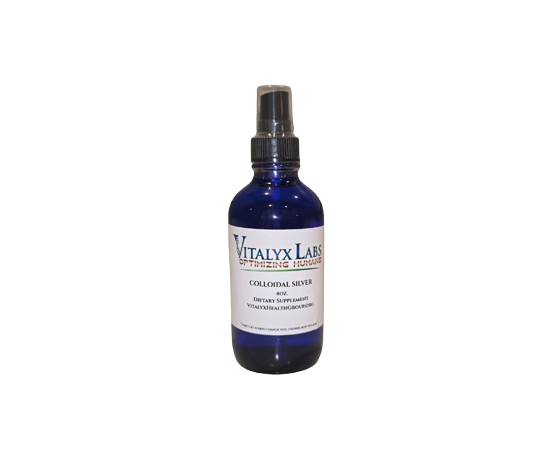
No resistance games. No blanket sterilization. Just intelligent interaction with microbial environments.
Precision particles interact with microbial surfaces through physical and chemical mechanisms.
Disrupts unfavorable biofilm environments and creates conditions less favorable to overgrowth.
Helps rebalance microbial ecosystems and supports the body's natural restoration processes.
This is supportive biology, not pharmaceutical force. Change the environment — biology responds.
Following prolonged skin irritation and repeated unsuccessful attempts with conventional OTC and prescription approaches, this 4-year-old child's mother explored our topical silver-based formulation intended to support the skin's surface environment. Within 48 hours, visible irritation noticeably decreased, persistent scratching subsided, and the skin appeared calmer and drier.
What this image reflects is how quickly microbial balance and barrier conditions can shift when the environment changes.
Benefits without risk — supporting the body's natural processes rather than forcing pharmaceutical intervention.
Promotes healthy skin and surface microbiome balance through environmental support.
Creates conditions less favorable for opportunistic microbes without harsh intervention.
Non-antibiotic, non-pharmaceutical approach with no known resistance pathways.
This isn't about attacking the body. It's about changing the terrain.
Suitable for both topical and oral use with the same environmental principle.
Vitalyx Labs operates at the intersection of clinical intelligence and real-world usability.
Products are not released based on trends — only when formulation, mechanism, and integrity align.
Operating at the intersection of clinical intelligence and real-world usability.
This silver system exists because the existing market failed to do it correctly.
"This silver system exists because the existing market failed to do it correctly."
This is engineering, not marketing. These answers focus on particle behavior, biological interaction, and practical safety—not folklore or fear.
Biological systems interact with matter at the nano and sub-micron scale. When silver particles exceed this range, they lose surface reactivity, tend to aggregate and settle, and fail to maintain meaningful contact with microbial environments. Precision silver requires a controlled particle size range and predictable surface behavior.
Ionic silver is electrically charged and rapidly neutralized. Traditional colloidal silver suspends particles that are often too large. Precision-engineered silver from Vitalyx uses controlled particle characteristics and stable dispersion designed specifically for biological environments.
Many microbes live inside biofilm communities—protective matrices that shield them. Effective silver systems are designed so that particles can interact with biofilm surfaces, subtly alter microbial terrain, and create conditions less favorable to overgrowth.
Topical use focuses on surface microbiome interaction, while oral use involves the gastrointestinal environment. In both cases, the principle is the same: change the environment and biology responds, rather than forcing outcomes through blunt force.
Argyria is historically associated with excessive intake of improperly formulated silver. Precision-controlled formulations and appropriate use protocols significantly reduce this risk. Because silver operates via physical interactions, resistance mechanisms are far less likely than with classical antibiotics.
Each summary below condenses published work on silver nanoparticles, formulation science, and safety into plain language you can share with clients or link from deeper technical resources.
Study: The Antibacterial Mechanism of Silver Nanoparticles and Its Application
Silver nanoparticles (AgNPs) exhibit broad-spectrum antimicrobial activity owing to their nano-scale size and high surface-to-volume ratio. Proposed mechanisms include disruption of bacterial membranes.
Study: Antimicrobial Silver in Medicinal and Consumer Applications
A decade-long review shows that not all silver products behave the same. Outcomes depend on how silver is formulated and stabilized, underscoring engineering requirements.
Study: Advances in silver nanoparticles: a comprehensive review
Silver nanoparticles demonstrate activity against biofilms and antibiotic-resistant strains. Effectiveness is influenced by synthesis method, particle size, and stability.
Study: Clinical translation and landscape of silver nanoparticles
Growing preclinical and early clinical evidence suggests certain formulations of AgNPs can reduce biofilm burden topically in controlled settings.
Study: A systematic review on silver nanoparticles-induced cytotoxicity
Nanoparticle properties such as size, shape, and concentration are key determinants of biological interactions. Toxicity profiles vary with formulation.
Study: Review of the effects of silver nanoparticle exposure on gut microbiota
Ingested silver nanoparticles interact with the gastrointestinal environment. Outcomes depend on particle characteristics and dose, warranting careful design.
Study: Antibacterial activity of colloidal silver against bacteria
In vitro data show that properly formulated colloidal silver can significantly inhibit growth of both Gram-negative and Gram-positive bacteria.
Study: Silver nanoparticles as next-generation antimicrobial agents
Recent research highlights advanced AgNPs designed for enhanced interaction with bacteria via membrane disruption and metabolic interference.
Join the growing community of educated consumers, health-conscious parents, and practitioners who demand formulation integrity.